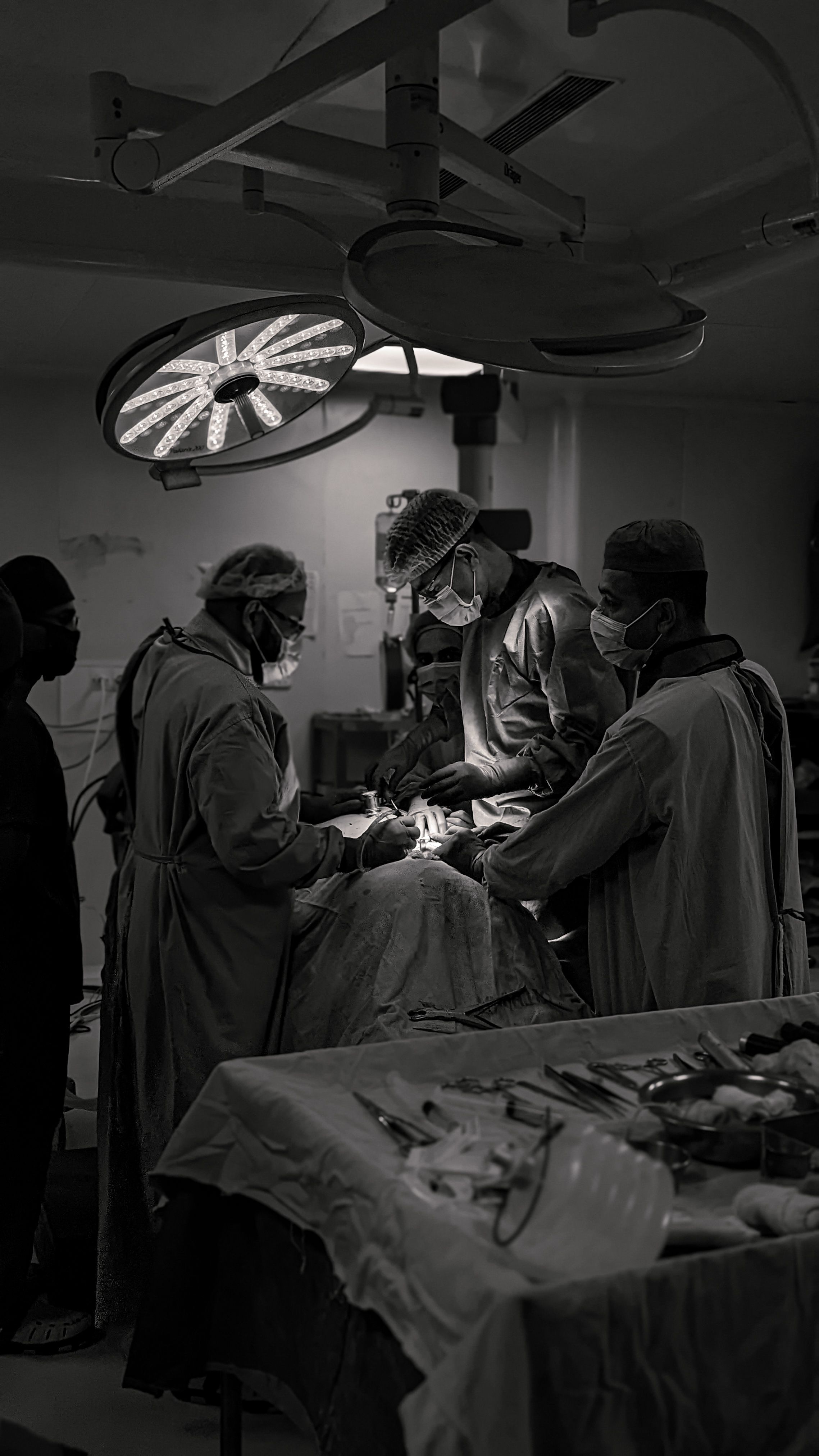
Surgery ends in the theatre. Recovery happens at home.
This is a distinction that most Nigerian families do not fully understand until they are living it — managing a fresh surgical wound, a complicated medication schedule, and a loved one in pain, in a house that was never designed to be a recovery ward, with no clinical training and no one to call when something does not look right.
The surgical team did their job. Now, somehow, it falls to you.
This article is about what post-surgical recovery actually involves, what the most common and dangerous mistakes at home look like, and what professional support can do to change the trajectory of recovery entirely.
Understanding what surgery does to the body
To manage post-surgical care effectively, it helps to understand what the body is actually going through in the days and weeks after an operation.
Surgery — regardless of the type, whether abdominal, orthopaedic, cardiovascular, or obstetric — creates a controlled wound that must heal from the inside out. The skin closes, but the layers of tissue beneath it require weeks of biological repair. The immune system redirects significant resources toward this process, which is why post-surgical patients feel profoundly exhausted even when they appear to be resting adequately. The body is working extremely hard at the cellular level, even when nothing is visibly happening.
This immune redirection also explains why post-surgical patients are significantly more vulnerable to infection than they were before their procedure. The body is occupied. Its defences are focused on the wound site. An infection that a healthy immune system might fight off easily can take hold quickly and aggressively in a post-surgical patient — particularly in the Nigerian home environment, where wound exposure, humidity, and inconsistent hygiene practices create a genuinely elevated risk.
Simultaneously, the body’s nutritional demands increase sharply. Tissue repair requires protein at levels well above normal daily intake. Hydration becomes critical for circulation, kidney function, and the movement of nutrients to the wound site. Many post-surgical patients have poor appetite — a predictable consequence of anaesthesia, pain, and medication side effects — at precisely the point when their body most urgently needs adequate nutrition. This gap between what the body needs and what the patient can consume is one of the most underappreciated factors in delayed post-surgical recovery.
The most critical period: Days 1 to 14
The first two weeks after surgical discharge represent the highest-risk window of the entire recovery journey. This is when wound infections develop, when medication errors cause complications, when blood clots form, and when the trajectory of recovery — toward full healing or toward readmission — is largely determined.
Understanding what can go wrong during this period is the first step toward preventing it.
Surgical site infections
Surgical site infections are among the most common post-operative complications, and they are also among the most preventable with proper wound management. They occur when bacteria enter the wound site — through contaminated dressings, improper cleaning technique, moisture exposure, or contact with non-sterile materials.
The early signs of a surgical site infection are specific and recognisable to anyone who knows what to look for. Redness that is spreading beyond the wound margins rather than fading. Increasing warmth around the incision site. Swelling that is worsening rather than improving. Discharge that is cloudy, yellow, green, or foul-smelling rather than clear or slightly pink. Fever above 38°C. Pain at the wound site that is intensifying rather than gradually improving.
The critical word in the paragraph above is recognisable. These signs are only caught early if someone with clinical training is assessing the wound regularly. A family member changing a dressing at home, without knowing what a healing wound looks like versus an infected one, without knowing how to distinguish normal post-operative inflammation from early infection, is not in a position to make this assessment reliably — no matter how careful and loving they are.
Infections caught on Day 3 or 4 are manageable. Infections that go unrecognised until Day 8 or 10 can require surgical intervention, intravenous antibiotics, and readmission.
Medication errors
Post-surgical patients are typically discharged on a minimum of three to five medications — often a combination of analgesics, antibiotics, anticoagulants, and medications specific to their underlying condition or procedure. Managing this regimen correctly requires understanding what each medication is for, knowing the exact dose and timing, recognising the side effects that indicate a problem, and understanding which medications interact with food, with each other, or with pre-existing prescriptions.
This is a significant clinical undertaking. And it is placed entirely in the hands of families at the point of discharge, typically with a printed medication list and a brief explanation from a nurse who is managing multiple patients.
The consequences of getting it wrong are serious. Stopping antibiotics early — one of the most common medication errors in the Nigerian home setting — allows bacterial infections to persist and develop antibiotic resistance. Incorrect dosing of anticoagulants increases the risk of blood clots. Mismanaging pain medication leads to under-treated pain, which prevents adequate movement and extends recovery time.
Immobility and deep vein thrombosis
This is perhaps the most counterintuitive aspect of post-surgical recovery, and one that catches many families entirely off guard.
Most people assume that a person who has just had surgery needs complete rest. In fact, most surgical protocols recommend that patients begin gentle, supervised movement within 24 to 48 hours of discharge — sometimes sooner. This is not about exercise. It is about preventing deep vein thrombosis, a condition in which blood clots form in the deep veins of the legs as a consequence of prolonged immobility.
Deep vein thrombosis is not always painful or obviously symptomatic. Left untreated, the clots can travel to the lungs, causing a pulmonary embolism — a potentially fatal complication that can occur within days of surgery.
The movement required to prevent this is not strenuous. Short walks around the room. Ankle rotation exercises from bed. Leg compressions and positioning. But it needs to be guided by someone who understands the surgical context, knows the patient’s specific restrictions, and can help the patient move safely without disrupting the wound site or causing unnecessary pain.
Families who encourage a loved one to rest completely because they are afraid of hurting them are, with the best of intentions, increasing the clinical risk. This is one of the clearest examples of why professional guidance in the post-surgical period is not a luxury — it is a clinical necessity.
What professional post-surgical home care actually looks like
At Livingrite Care, post-surgical care is one of our core services, and it is structured around exactly the risks described above.
Our post-surgical care begins with a thorough assessment of the patient’s specific procedure, their discharge instructions, their current medication regimen, and the home environment they are recovering in. From this we build a care plan that is specific to them — not a generic protocol, but a clinical response to their actual situation.
Our nurses visit regularly to perform professional wound assessment and dressing changes, monitor vital signs, assess medication compliance and side effects, and identify any early warning signs that require escalation to the doctor. Every nursing visit includes a report that is shared with the family — including those coordinating care from abroad — so that there is never an information gap between what is happening on the ground and what the family knows.
Our physiotherapists provide guided mobilisation in those critical early days, ensuring the patient moves safely and appropriately for their surgical context, reducing the risk of clots and beginning the process of rebuilding strength and independence at the right pace.
Our caregivers provide consistent daily support — personal hygiene assistance, meal preparation aligned to nutritional recovery needs, medication reminders, and the practical help that allows the patient to conserve energy for healing rather than expending it on tasks they are not yet strong enough to manage safely.
And our medical director oversees every care plan personally, adjusting it as the patient’s recovery progresses and making clinical decisions that would otherwise require a hospital visit.
When to seek post-surgical home care
The answer, in almost every case, is as early as possible — ideally before the patient is discharged, not after a complication has already developed.
The families that avoid post-surgical complications and readmissions are not the ones who happen to be lucky. They are the ones who recognised that managing post-surgical recovery at home without clinical support is genuinely risky, and who put professional oversight in place before they needed it rather than after something went wrong.
If your loved one is scheduled for surgery, or has recently been discharged, or if you are managing post-surgical care from abroad and are uncertain about whether recovery is progressing correctly — this is the conversation to have.
Our free 30-minute consultation is designed for exactly this moment. We will listen to your situation, review what we know about the procedure and the current recovery status, and give you an honest picture of what support your loved one needs and how Livingrite Care can provide it.
No charges. No obligation. Just clinical honesty from a team that has supported hundreds of Nigerian families through exactly this. You can reach us on whatsApp or Call us at 08106834519
Serving families across Lagos — and the families who love them from abroad.