There is a sentence every family hopes to hear after a difficult hospital stay:
“Your loved one is ready to go home.”
After days or weeks of hospital treatment, it can feel like the hardest part is finally over. But for many families, going home is not the end of the journey but the beginning of a different one. The questions can quickly start rushing in.
Who will help Mum move around?
Who will make sure Dad takes his medications correctly?
What happens if the surgical wound needs attention?
Who will help with physiotherapy after a stroke?
What if the patient is still weak?
What if something changes and the family is unsure whether it is serious?
For families caring for an elderly parent, someone recovering from surgery, a stroke survivor or a person recently discharged after a serious illness, the transition from hospital to home can be challenging.
This is where professional home healthcare can provide an important layer of support.
What Is Home Healthcare?
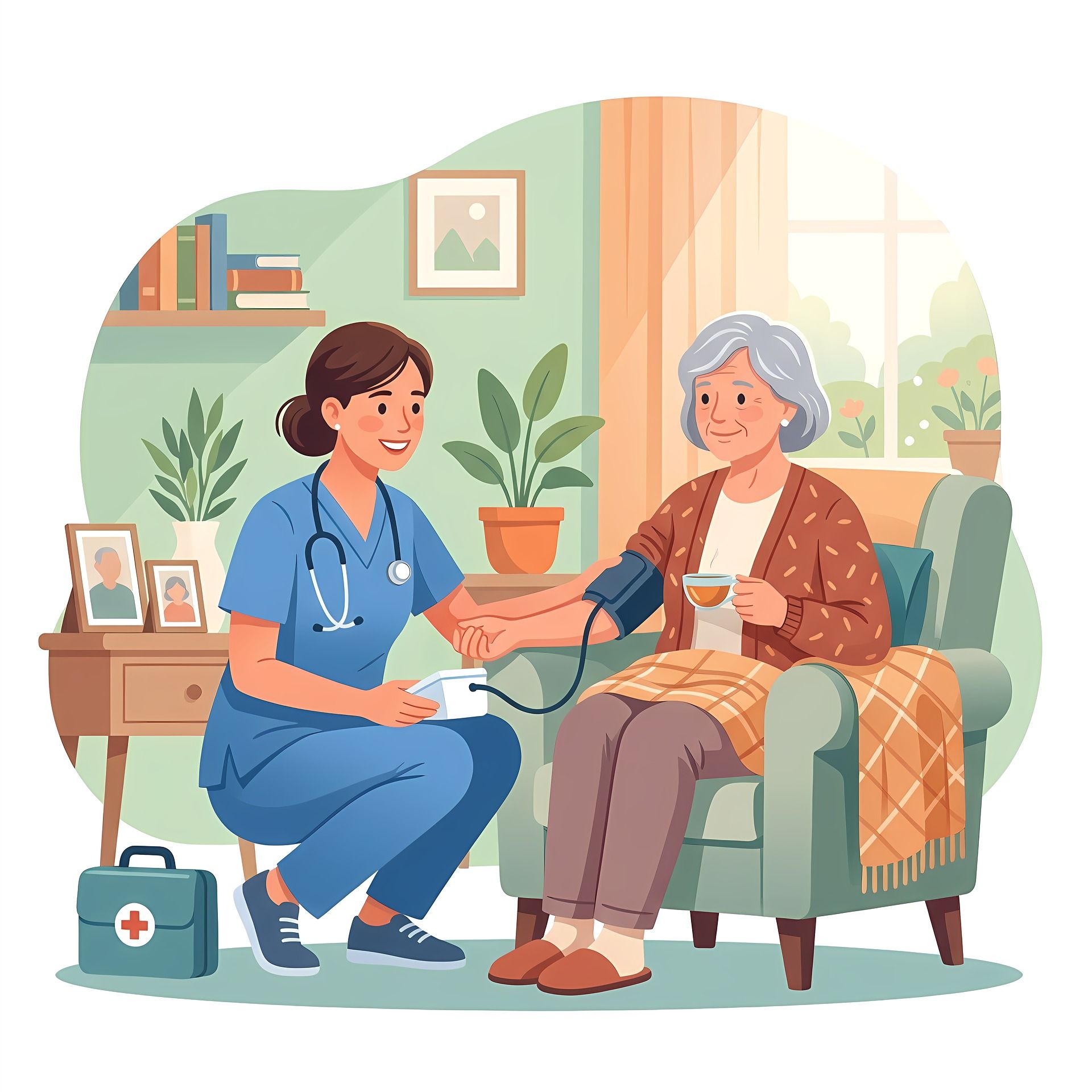
Home healthcare involves providing appropriate healthcare and support services within a patient's home. Instead of requiring a patient to travel to a hospital or clinic for every aspect of their care, qualified healthcare professionals can provide certain services in the patient's own environment, depending on their individual needs and care plan.
The important word here is individual.
Not every patient needs the same type or level of care.
Someone recovering from surgery may need a very different form of support from an older adult experiencing reduced mobility.
A stroke survivor may require rehabilitation, while someone recovering after intensive care may need support rebuilding strength and returning to everyday activities.
Good home healthcare begins by understanding the patient, rather than simply providing a standard package of services.
Why the Transition Home Can Be Difficult
Hospitals are structured environments. There are healthcare professionals nearby, scheduled observations, medication routines and access to medical equipment and support.
At home, much of that responsibility can suddenly shift back to the patient and their family. This can be particularly difficult when the patient is not yet fully independent.
A family may know that their loved one needs care but not know exactly what kind of care, how often it is needed, or what changes they should be watching for.
The situation can become even more complicated when family members have work, school or other responsibilities.
And for families living abroad who are coordinating the care of parents or relatives in Nigeria, distance adds another layer of uncertainty.
You may be able to call every day.
But a phone call cannot replace someone physically being there.
What Does Home Healthcare Actually Look Like?
One of the biggest questions families have before arranging home healthcare is simple:
“What will actually happen when the healthcare professional comes to our home?”
The answer depends on the patient's condition and care plan.
But generally, professional home care begins with understanding the patient's current situation.
1. Understanding the Patient
Before care begins, our healthcare team needs to understand the patient's health needs and this may include information about their recent hospital admission, current medications, recent procedures or surgery, personal care requirements.
This information helps determine what appropriate support should look like.
The goal is not simply to ask, “What does the patient need today?”
It is also to understand where they are in their overall recovery.
2. Care Happens Where the Patient Actually Lives
One of the major differences between hospital-based and home-based care is the environment.
A healthcare professional sees the patient in their actual living space. That can provide useful context.
How easily can they move around the house?
Do they require assistance getting out of bed?
Are there practical challenges affecting their independence?
Does the family need support understanding how to assist them?
For rehabilitation in particular, the home environment is where many everyday challenges actually occur.
Home healthcare allows appropriate care and support to take place within that reality.
3. The Care Is Based on the Patient's Needs
There is no single version of a home healthcare visit.
For an older adult, care might involve assistance with daily activities, mobility support and ongoing monitoring.
For someone recovering from surgery, it may involve appropriate nursing support and monitoring during their recovery.
For someone recovering from a stroke, physiotherapy and rehabilitation may form an important part of their care.
For someone recently discharged after a serious illness, ongoing professional monitoring and support may help them gradually regain strength and independence.
The setting is the same.
The care is not.
That is why a proper assessment and individualised care plan matter.
Home Healthcare Is Also About Supporting the Family
When someone you love becomes unwell, the family often becomes part of the care team overnight.
You may suddenly find yourself responsible for medications, appointments, meals, mobility assistance and monitoring changes in their condition.
That can be overwhelming.
And being a family member does not automatically make someone a trained caregiver.
Professional home healthcare can provide families with an additional layer of clinical and practical support.
It can also help families better understand what is happening with their loved one and what they should be paying attention to.
For people coordinating care from outside Lagos, Abuja or even outside Nigeria, this support can be particularly valuable.
You may not be physically present every day.
But you can still know that someone qualified is there to provide appropriate care and communicate with you.
Why Continuity Matters in Recovery
Recovery is rarely a single event but a continuous process. A patient may gradually become stronger, regain mobility, a surgical wound may heal over time.
A stroke survivor may make progress through rehabilitation.
An older adult may become more confident with movement and daily activities.
These changes become easier to understand when care is consistent.
Professional home healthcare can provide continuity through ongoing assessment, care, rehabilitation and communication, depending on the patient's needs.
Home Healthcare Is Not About Bringing the Hospital Into Your Living Room
There is an important distinction to make.
The goal of home healthcare is not to turn someone's home into a hospital.
It is to provide appropriate professional support within the patient's home environment.
For many patients, home is where they feel most comfortable.
It is where their family is.
It is where their routines, memories and familiar surroundings are.
When clinically appropriate, receiving support at home can allow patients to continue their recovery in an environment that feels more personal and familiar.
The healthcare professional brings the expertise.
The patient gets to remain in their own space.
Where LivingRite Care Comes In
At LivingRite Care, we believe that care should not stop at the hospital door.
Our approach to home healthcare is centered around supporting patients beyond the hospital and helping families navigate the often-overlooked period between hospital treatment and life at home.
Every patient has a different story.
So the starting point is not a predetermined package.
It is understanding the person who needs care.
What Should You Do If Your Loved One Needs Care at Home?
If your loved one has recently been discharged from hospital, is recovering from surgery, needs rehabilitation, or is struggling to manage independently at home, you do not have to figure everything out alone.
Start by asking:
What can my loved one safely manage independently?
What tasks do they need help with?
Do they require professional nursing support?
Would physiotherapy or rehabilitation help?
Does someone need to monitor their condition?
How much support does the family realistically have available?
What happens if their condition changes?
The answers can help you understand what type of support may be appropriate.
And if you are unsure, speaking with a healthcare professional is a good place to start.
Because Going Home Shouldn't Mean Going It Alone
Hospital discharge can feel like the finish line.
But for many patients and families, it is actually the beginning of recovery at home.
The transition can come with uncertainty, responsibility and sometimes fear.
Professional home healthcare can help make that transition more structured by bringing appropriate healthcare support into the patient's own environment while keeping the family involved.
At LivingRite Care, that is the space we want to fill.
Because care should not stop when the hospital door closes.
If your loved one needs support at home after hospital discharge, surgery, illness, stroke or a period of rehabilitation, speak with the LivingRite Care team about their needs. You can start with our free 30 minute consultation, you can reach out to us via whatsapp at 08106834519. You can also check out our services on our website www.livingritecare.com.