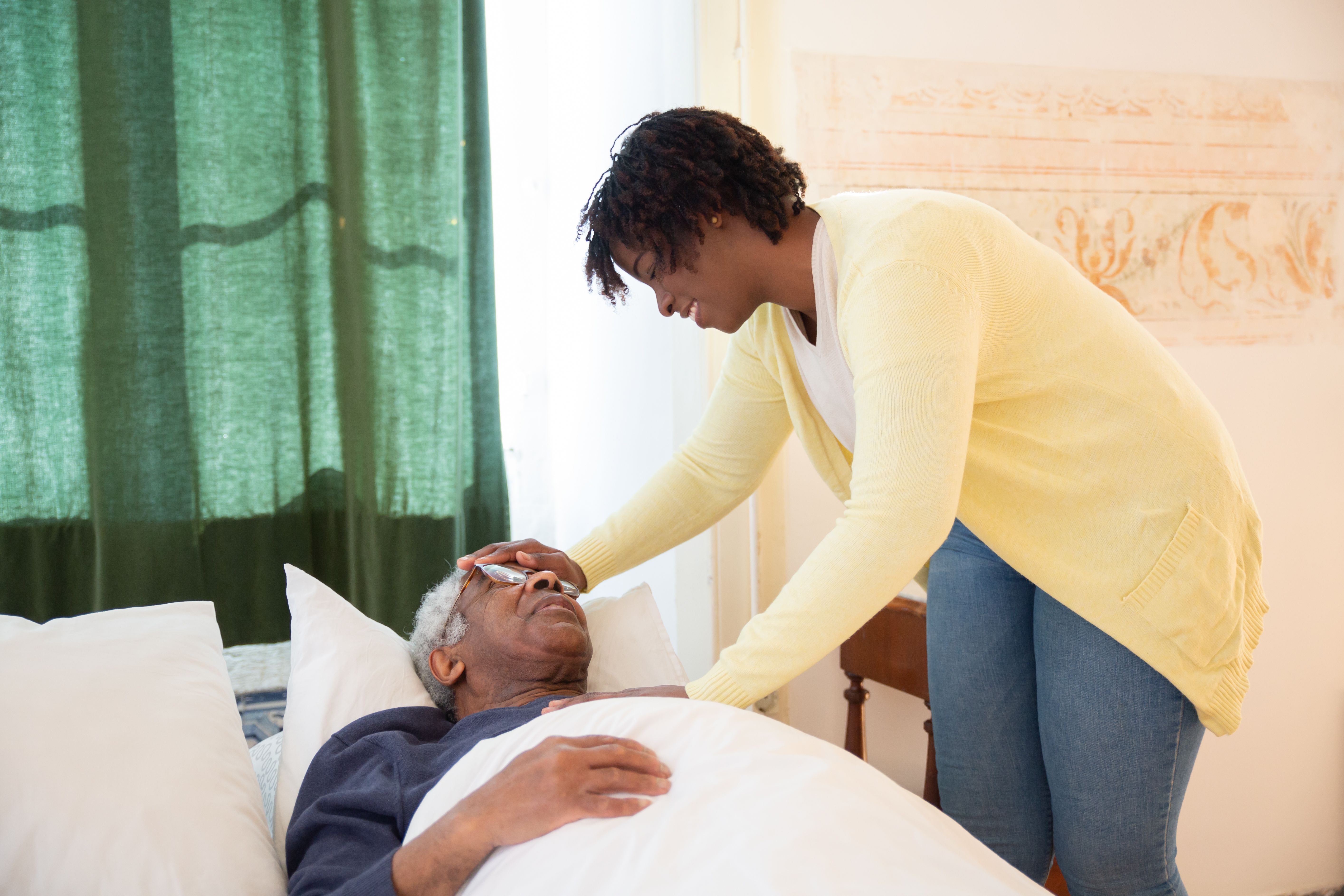
There is a conversation that happens in almost every Nigerian family at some point when a parent is ill or a loved one needs care. The family is exhausted, stretched thin, managing work and children and the weight of caregiving responsibilities they were never trained for and someone so bravely yet carefully suggests bringing in a professional caregiver or home healthcare team.
And then the downpour begins.
“So you want strangers to take care of your own mother?”
“In our family, we look after our own.”
“What will people say?”
”Ah. So you cannot sacrifice small thing for the person who raised you?”
If you have been in this conversation — on either side of it — you know exactly what it feels like. The immediate, heavy guilt and criticism of your suggestion,your love. On what kind of child, spouse, or family member you are.
This article is for everyone who has sat with that guilt. And it is going to say something plainly that Nigerian culture rarely says out loud.
Asking for professional help is not a failure of love. In many cases, it is the most loving thing you can do.
Where the guilt comes from
To understand why this guilt exists, it helps to understand where it comes from.
Nigerian culture carries a deep, beautiful tradition of communal responsibility. The idea that family takes care of family — that we do not abandon our own, that we show love through sacrifice and presence — is not wrong. It is a value worth preserving. It reflects something genuinely good about who we are as a people.
But somewhere along the way, this value became attached to a specific and damaging idea: that bringing in outside help is a sign that you have failed to love your person enough to sacrifice for them yourself.
This equation — love equals sacrifice equals managing everything alone — sounds noble. But it is not clinical reality. And in healthcare contexts, it can cause genuine harm.
Because here is what that equation asks of real people in real situations: it asks a daughter with a full-time job, two children, and a husband to also be a skilled wound care nurse, a medication manager, a physiotherapist, a 24-hour monitor, and an emotional support system for a parent recovering from major surgery. It asks a son living in the UK to somehow provide the daily physical presence that his mother in Lagos needs while also having a job, a life, and the small complication of being in a different country.
It asks people to do the impossible — and then makes them feel guilty when they cannot.
The misconception at the heart of it
The deepest misconception driving this guilt is the belief that professional care and family love are in competition with each other.
They are not.
A nurse who comes to your mother’s house every morning to check her vitals, change her dressing, and administer her medication is not replacing you. She is doing something you were never trained to do. She is providing clinical expertise that you do not have and that your mother genuinely needs — not because you failed, but because medicine is a skill that takes years to learn and you did not go to medical school.
When you call a professional home healthcare team, you are not saying *I do not love my parent enough to care for them. You are saying “I love my parent enough to make sure they receive care that is actually appropriate for their medical needs”
These are completely different things. And conflating them — treating professional care as a replacement for love rather than a supplement to it — is not just factually wrong. It is actively harmful to the patients who suffer while their families try to manage clinical situations without clinical training.
What unassisted family caregiving actually costs
Let us be specific about what families are actually managing when they reject professional support in favour of doing it themselves.
Medication management for a post-surgical or chronically ill patient in Nigeria typically involves between four and eight different drugs, each with specific timing, dosage, dietary requirements, and potential interactions. Getting this wrong — missing doses, doubling up, stopping antibiotics early — causes complications. Readmissions. Infections. In some cases, fatalities.
Wound care for post-surgical patients requires sterile technique, specific cleaning protocols, and the trained eye to distinguish a healing wound from an infected one. Doing it incorrectly does not just fail to help — it actively causes harm.
Physiotherapy and rehabilitation after stroke or major surgery requires professional knowledge of safe movement, progression protocols, and warning signs. Encouraging a loved one to rest completely when they should be moving, or to move when they should be resting, has direct clinical consequences.
None of these are things that love can substitute for. A family member can be present, warm, encouraging, and deeply devoted — and still get the clinical management wrong, through no fault of their own, because they were never trained.
The cost of this is not abstract. In Nigeria, post-discharge complications and readmissions are among the most common and most preventable healthcare outcomes. They happen disproportionately in families trying to manage complex care alone, without professional support.
The caregiver nobody is talking about
There is another person in this story who is rarely mentioned in the guilt conversation.
The family caregiver themselves.
The daughter who has not slept properly in three weeks. The son who has taken unpaid leave from work, spent through his savings, and is quietly, privately wondering how much longer he can do this. The spouse who has not been a partner in months because they have become a nurse, a housekeeper, and a crisis manager simultaneously.
Caregiver burnout is real, clinically documented, and devastating — both for the caregiver and for the person they are caring for. When a caregiver burns out, the quality of care declines. Medications get missed. Warning signs get overlooked. The very outcome everyone is trying to prevent becomes more likely because the person responsible for preventing it has been ground down to nothing.
The culture that asks people to sacrifice themselves entirely for their loved one’s care rarely asks the follow-up question: and what happens to the patient when you collapse?
Professional home care does not just protect the patient. It protects the caregiver. It gives a daughter back to her children. It gives a son permission to go back to work without guilt. It gives a spouse the capacity to sit beside their partner as a partner — holding their hand, talking to them, being present — rather than calculating medication schedules and changing dressings.
This is not weakness. This is wisdom.
What love actually looks like in a clinical context
Love in a healthcare context does not look like sacrificing your mental health, your career, and your physical wellbeing to provide care you were not trained to give.
Love in a healthcare context looks like making sure your loved one receives the best possible care for their condition — clinical, consistent, professional care that actually meets their medical needs.
It looks like being present as family — as a son, daughter, spouse, or sibling — while allowing trained professionals to handle the clinical complexity that requires training to handle well.
It looks like visiting your mother after her wound has already been dressed correctly, sitting with her, watching her programmes with her, making her laugh — rather than arriving tired and anxious to attempt a dressing change you are not confident about, in a way that may or may not be sterile, from a YouTube tutorial you watched the night before.
It looks like calling from London knowing that your father’s medication has been administered correctly today, and yesterday, and will be tomorrow — rather than lying awake at 3am wondering whether your sibling remembered the 10pm dose.
That is what professional home care enables. Not the absence of love. The presence of it — in its most appropriate and sustainable form.
A word to the families judging from the outside
The families making the decision to bring in professional help are not doing it because they do not care. They are doing it because they care deeply enough to make a difficult decision under pressure, to navigate cultural judgment, and to prioritise their loved one’s actual medical needs over the appearance of sacrifice.
They deserve support, not guilt.
To the family still carrying this guilt
If you have been considering professional home care and holding back because of what people might say — or because some part of you has absorbed the idea that needing help means you are not enough —
You are enough. You have always been enough.
And your loved one deserves care from someone who is clinically trained to provide it — in addition to the love that only you can give.
Those two things are not in competition. They never were.
At Livingrite Care, we support families across Lagos and Abuja who are navigating exactly this. Our team of nurses, physiotherapists, caregivers, and a critical care doctor provides clinical home healthcare that allows families to be families again.
We start with a free 30-minute conversation. No charges, no obligation — just an honest discussion about what your loved one needs and how we can help.
You can reach us via whatsApp or Call us at 08106834519
Serving families across Lagos & Abuja — and the families who love them from abroad.